Dirt Diaries.com
A garden that remembers for you.
Every alternative I tried wanted a subscription, then buried the dates I needed under content that didn’t apply to my zone.
Available in beta. Plant data, date calculations, and layout features are still being developed.
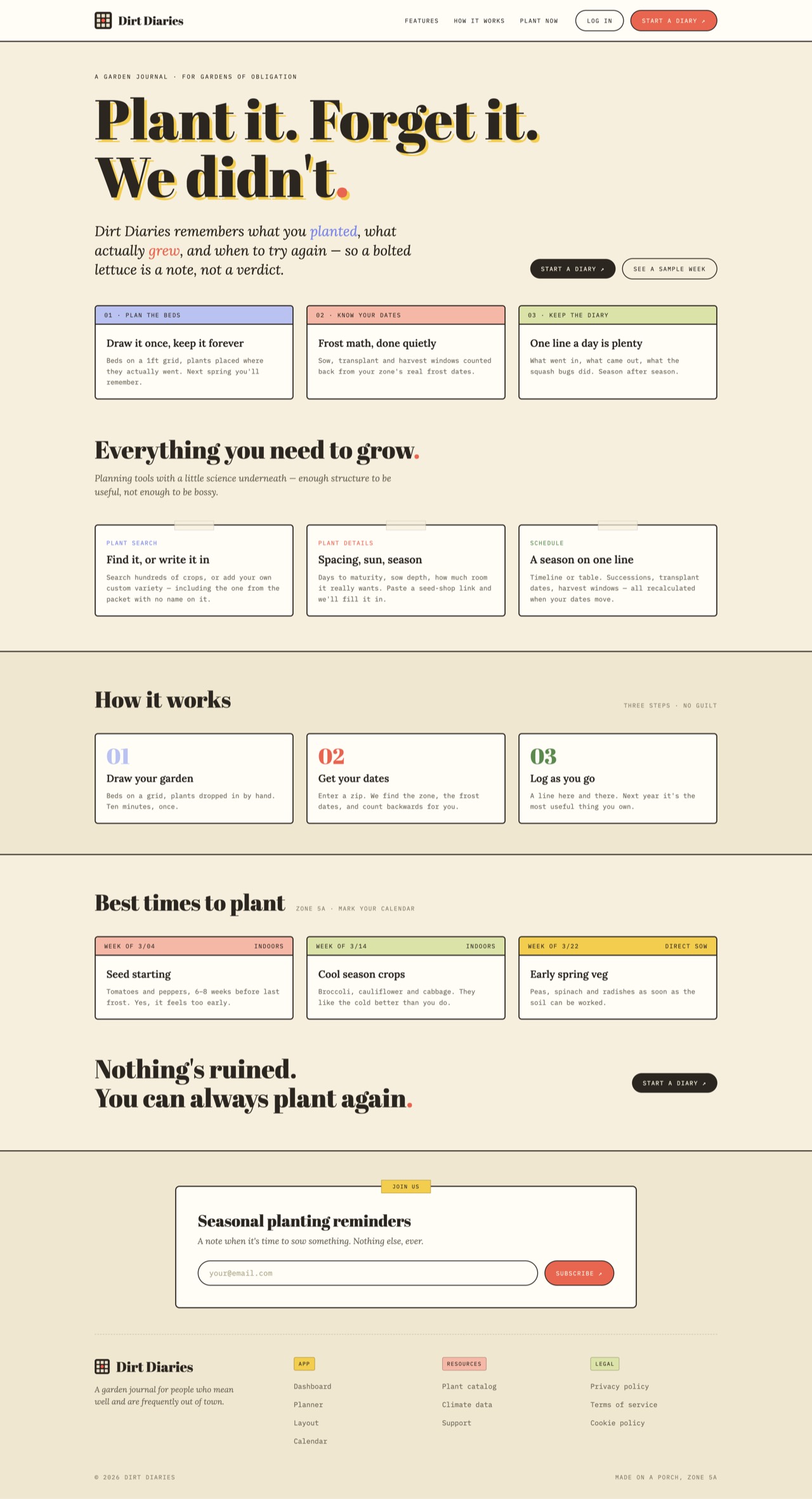
Problem
Gardening planners buried a simple timing problem under subscriptions, features and content that didn’t apply to my garden.
My role
I designed and built the planner around the information I actually use in my own garden.
Scope
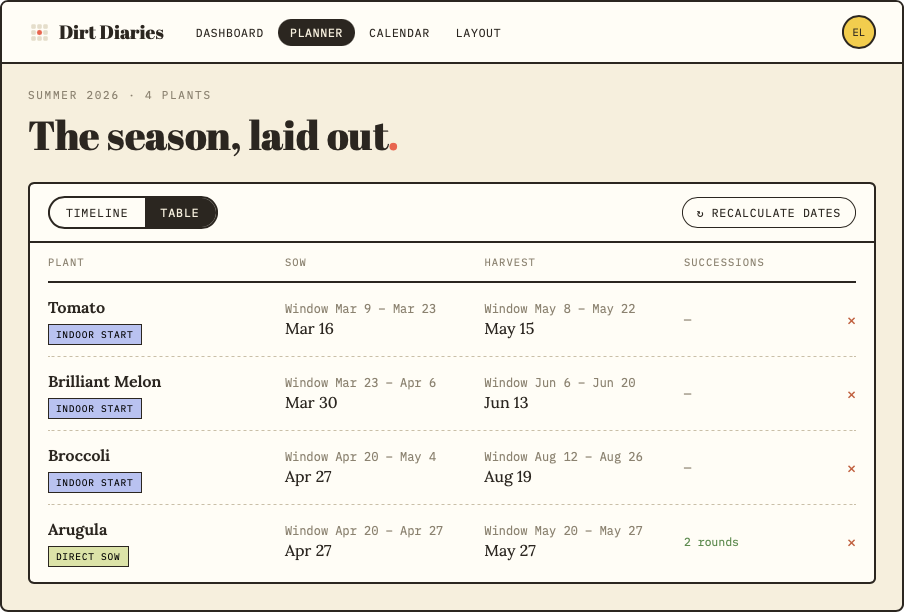
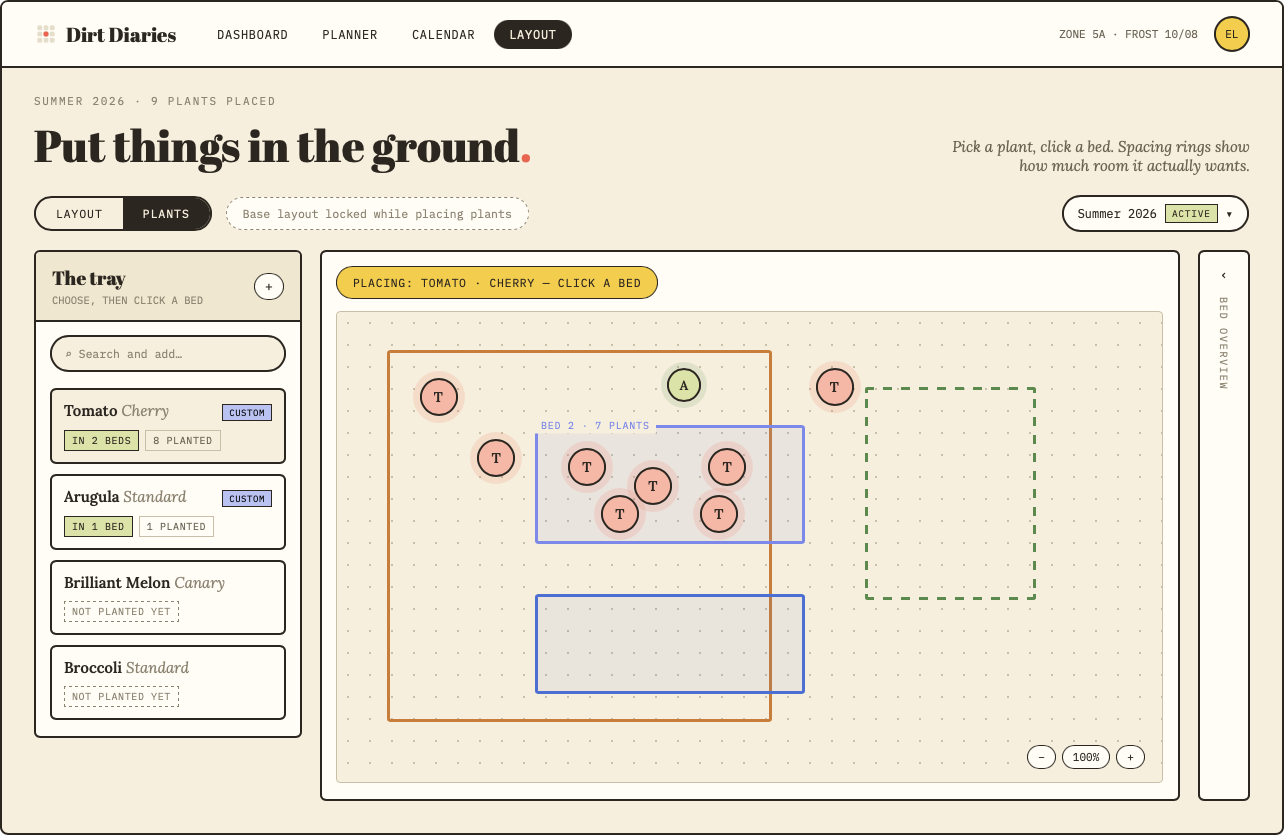
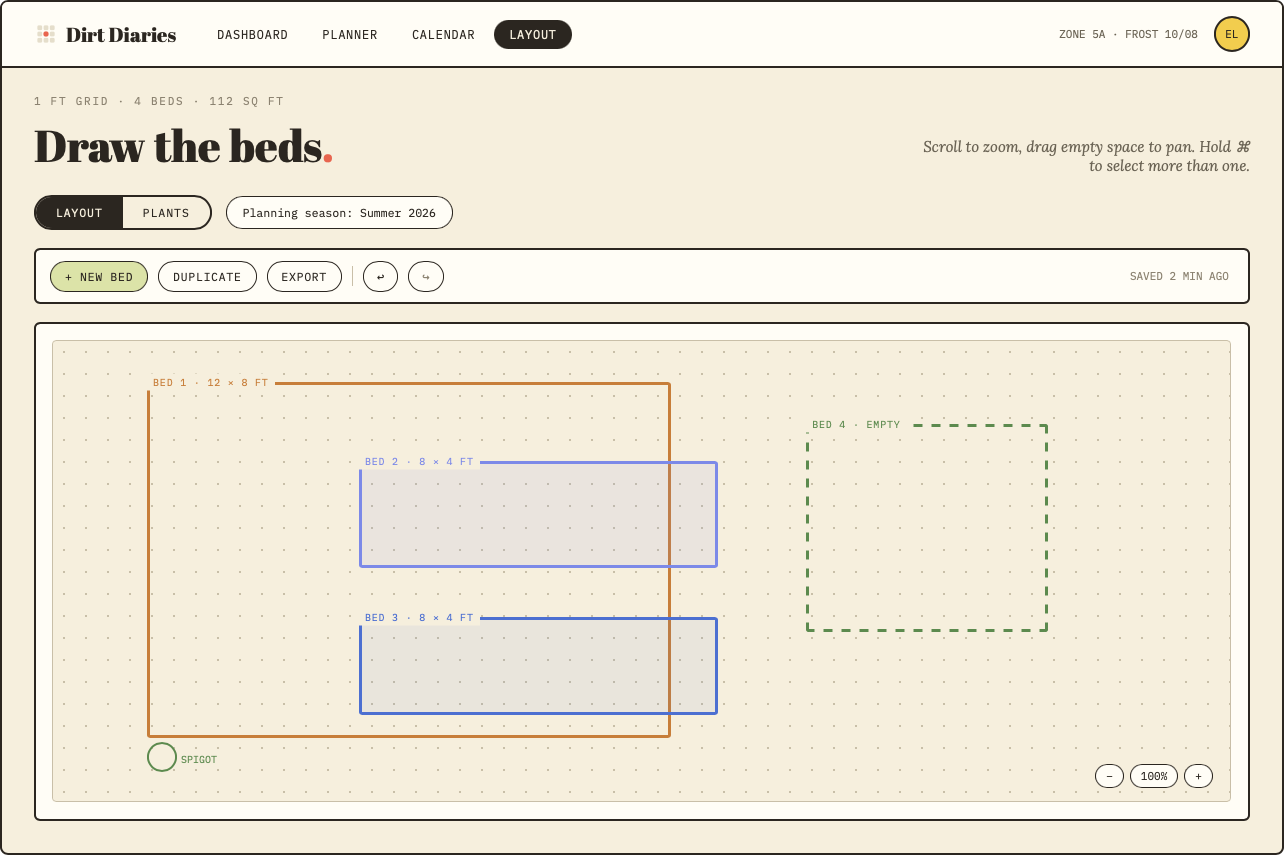
A free web app covering seasonal timing, bed layouts, plant spacing and a garden-specific planting timeline.
What changed
The information I used to piece together now lives in one place, organized around my own zone, frost dates and beds.
What this demonstrates
I can find the useful core of a crowded product and leave the rest out.
Garden planning without the extra work.
The information needed to plan a garden was scattered across tools, subscriptions, and reference material. Dirt Diaries brings seasonal timing, planting information, and bed planning into a focused workspace.
Articles I didn’t ask for sat beside features I’d never open, and even the home screen was selling me the rest of the app.
What I wanted was small. I want to know when to start seeds, when to plant them outside, and when to expect something back (why do I feel new to vegetables the second something looks ready to pick). I like information, but I don’t need to be wading through a content library to reach it.
So I built it myself and left it free, which took considerably longer than paying for one would have.
No feed
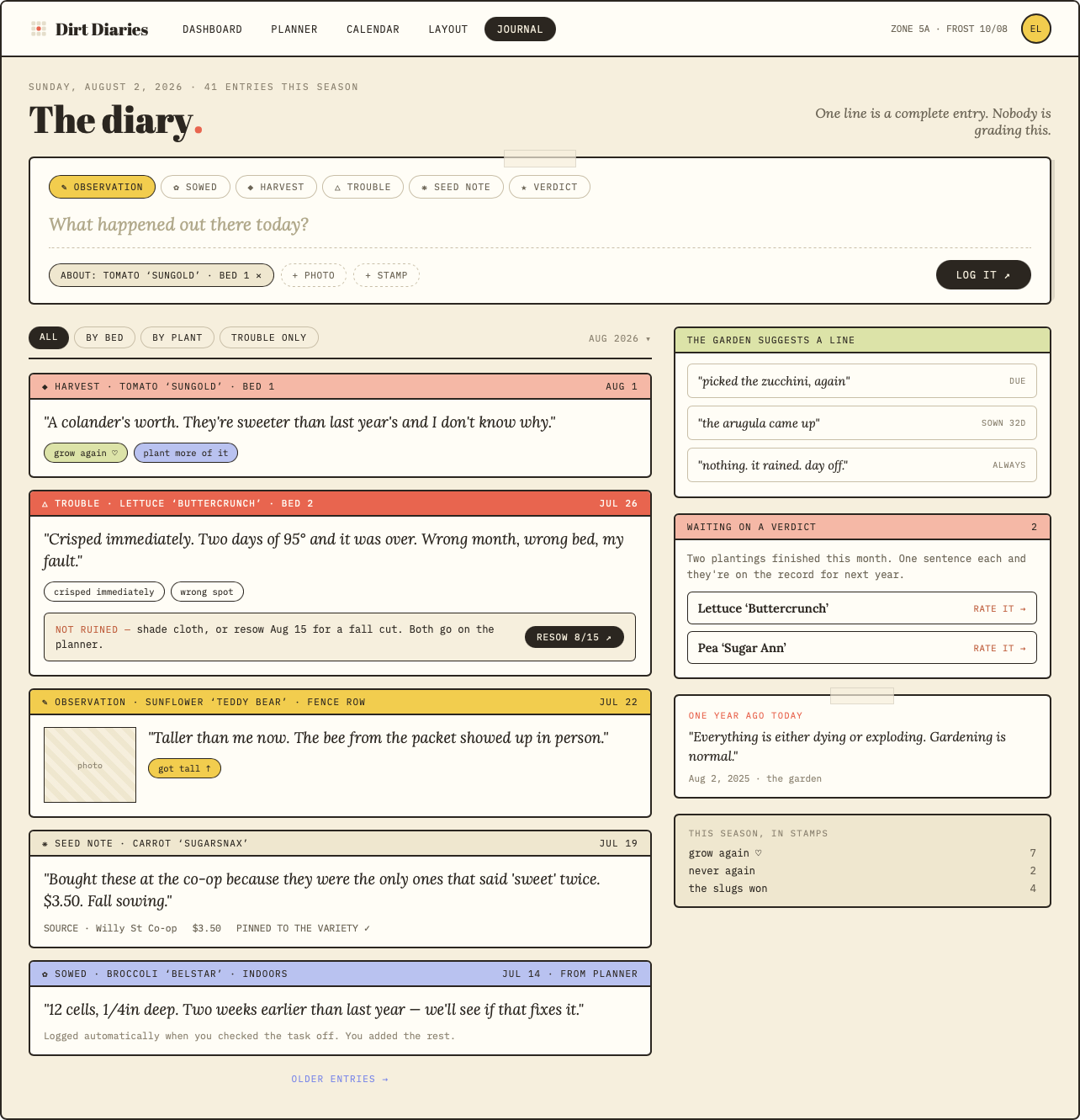
No followers, no photos of somebody else’s tomatoes. It’s a record of one garden kept for the person who planted it.
No streaks
Missing two weeks in the garden is normal, and an app that scolds you for it is an app you stop opening in July.
No articles
Those guides may help an app get found. They didn’t help me plan my garden, so I left them out.
No paywall
It costs me very little to run and I built it for myself first, so there’s nothing to buy and nothing to cancel.
The date engine is the hard one and it isn’t finished. Zone and frost dates give you the outer frame. Every plant has its own timing inside it, and those dates need to move together when one decision changes in March.
The bigger problem underneath it is that gardeners don’t garden the same way. Square foot, conventional rows, or whatever fits wherever there’s room. Supporting one method is the easy version. Supporting several without making the tool opinionated about which one you should use is what I’m still working through.
The plant database is the other one. It’s less interesting and much more work. Spacing, timing and succession numbers have to be right for every plant or the dates it hands you are worse than no dates.
Available in beta, and I use it in my own garden.
The plant list is incomplete. Bed layouts are still moving. What I want next is for it to lay a bed out once you’ve picked what you want to grow, since choosing is the fun part and arranging is the chore.
Inside the product
scroll →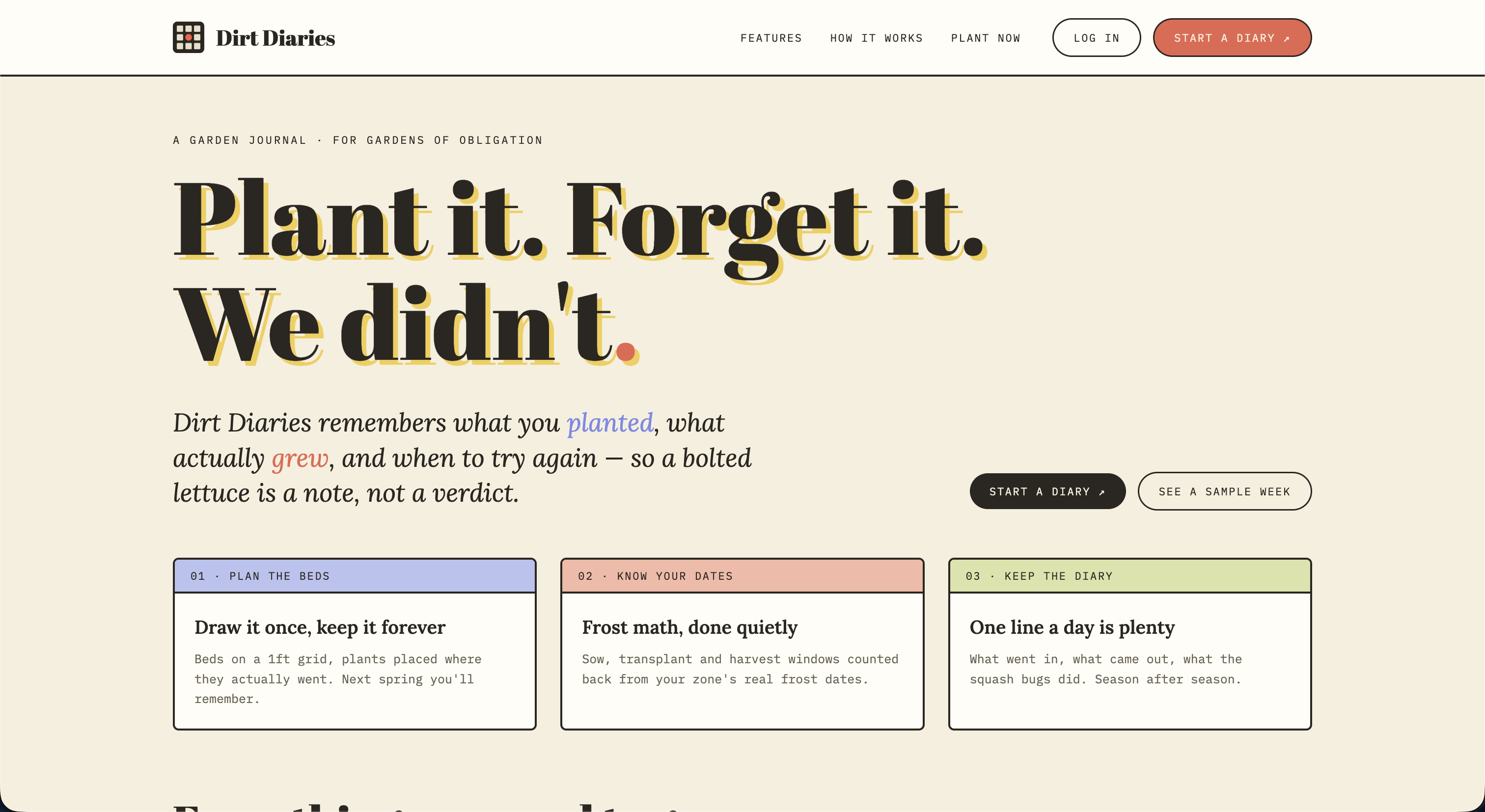
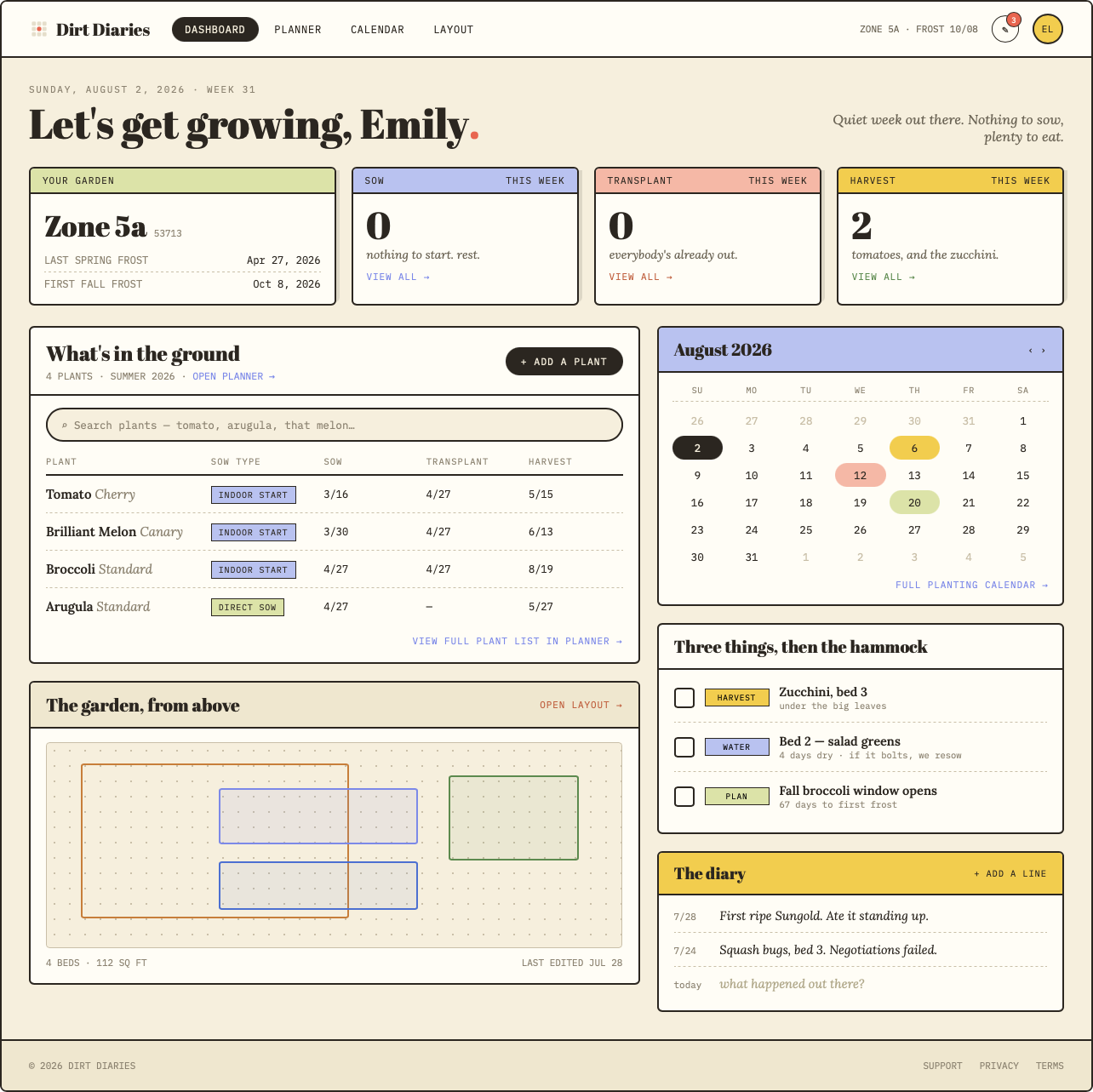
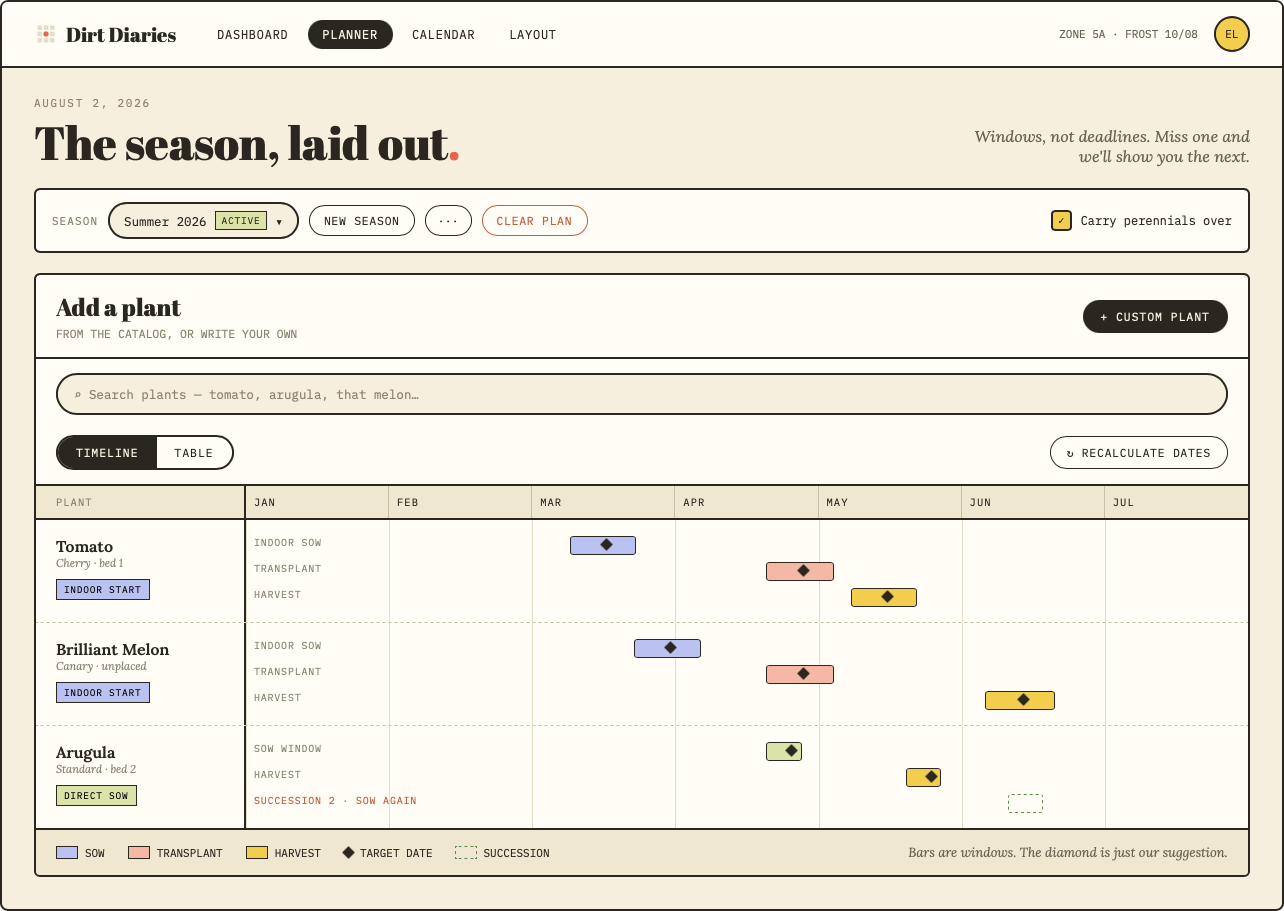
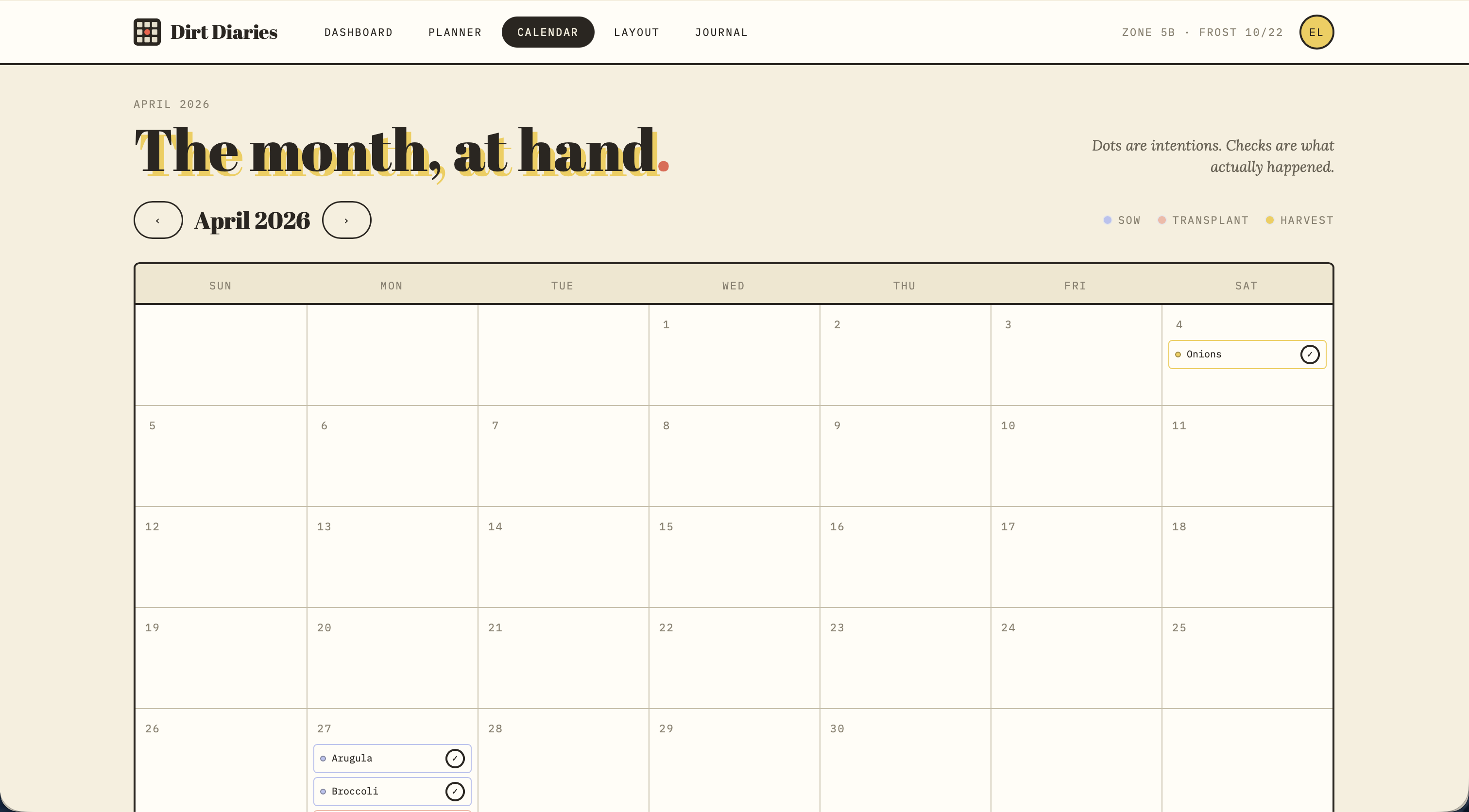
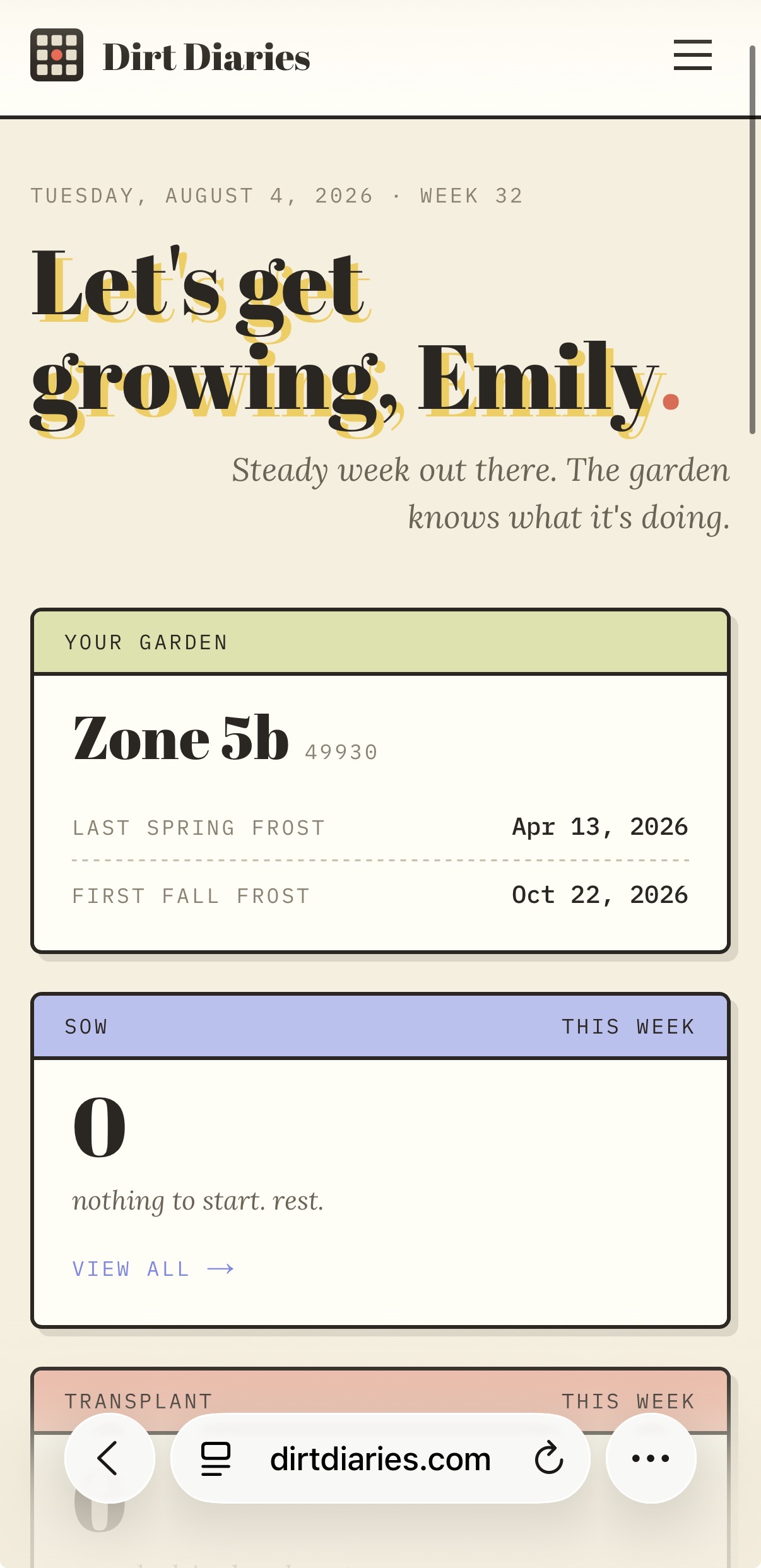
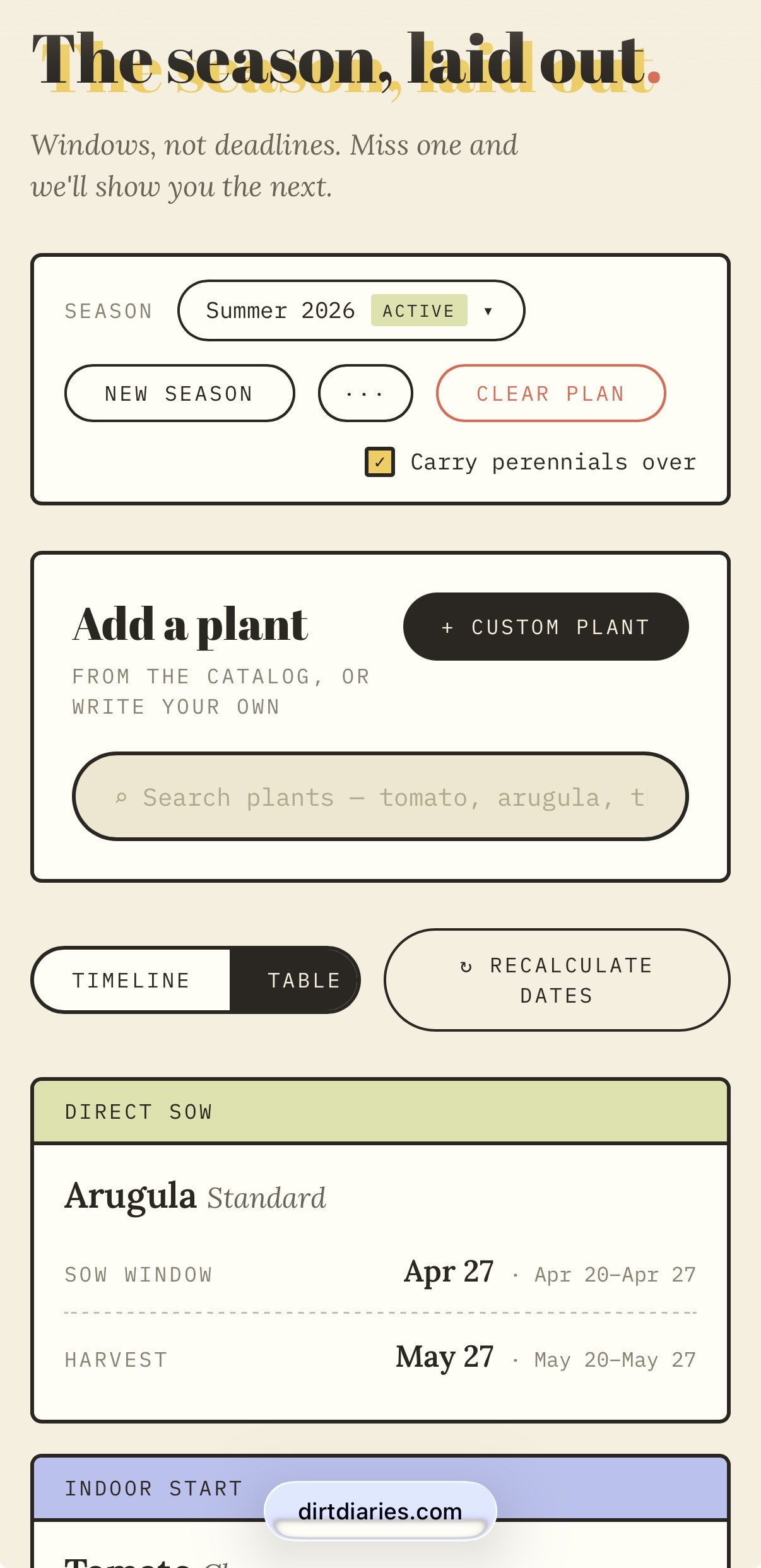
It remembers the garden, so you don’t have to.
One project on the registry. If your product has grown past the useful part, I can help decide what stays and what goes.